Principal Consultant
Sapience Consulting

As a trusted leader in professional development, Sapience empowers you to invest in your future.

Don’t wait – Explore our available funding and leverage our expertise to upskill without financial strain.

Share This Piece:

Auditing the AI Future:

Why IT Auditors Need the ISACA AAIA Credential

1 JULY 2025

In today’s AI-powered economy, the role of the IT auditor is undergoing profound transformation. As artificial intelligence (AI) becomes central to business strategies, governments, and regulatory frameworks across Asia-Pacific are responding with policies that aim to both harness AI’s benefits and mitigate its risks. Amid this shift, IT auditors face a new challenge: ensuring AI systems are transparent, accountable, and secure.


To meet this challenge, the ISACA Advanced in AI Audit (AAIA) certification emerges as a critical credential. It is designed not only for those in North America or Europe but especially relevant for professionals across Asia-Pacific, where digital transformation is accelerating, and regulatory scrutiny is catching up. Nowhere is this more evident than in Singapore, where AI policy and governance are among the most advanced in the region.

The Case for AI Audit Capability in Asia-Pacific

The Asia-Pacific region has seen a surge in AI adoption—from smart city initiatives in Singapore and South Korea, to data-driven financial services in Hong Kong, and the manufacturing automation wave in China. These advancements, however, also introduce complex risks: data bias, opaque algorithms, unpredictable decision-making, and cybersecurity vulnerabilities embedded within AI systems.

Governments across the region are responding. Here are a few key examples:

  • Singapore has introduced its Model AI Governance Framework—a globally recognised, sector-agnostic guide on deploying AI responsibly. It also established the AI Verify framework to evaluate AI systems for fairness, transparency, and robustness.

  • South Korea unveiled its National Strategy for AI to position itself among the top AI nations by 2030, with strong emphasis on ethical oversight.

  • Japan’s AI strategy focuses on developing “trustworthy AI” and explicitly includes provisions for transparency and third-party auditing.

  • China, while pushing AI innovation aggressively, has also issued regulatory guidance on algorithmic accountability, requiring platforms to register and explain key AI algorithms used in services.

With this regulatory momentum, organisations will increasingly need professionals capable of evaluating AI models—not just from a technical lens, but with governance and compliance in mind. This is where the AAIA fits in.

Why the AAIA Is Vital for the Asia-Pacific Audit Community

The AAIA credential from ISACA addresses the knowledge and skill gap in auditing AI systems—a gap that is especially urgent in markets where AI is being embedded into everyday operations at breakneck speed.

Here’s how AAIA aligns with regional needs:

1: Bridging the Gaps in AI Literacy

Many auditors in Asia-Pacific, despite their technical fluency, are still learning to understand how AI models work, what their risks are, and how to properly evaluate them. The AAIA certification covers fundamentals of AI/ML technologies, the audit lifecycle for AI systems, and how to assess algorithmic risks.

In Singapore, the Infocomm Media Development Authority (IMDA) has repeatedly called for upskilling professionals in AI ethics and governance. By equipping auditors with the tools to ask the right questions about AI deployments, AAIA helps meet this strategic goal.

2. Ensuring AI Accountability Amid Regional Regulation

In countries like Singapore and Japan, where government-issued AI frameworks emphasise “explainability,” auditors must go beyond black-box assumptions. They must evaluate whether an AI model is interpretable, whether it adheres to principles of fairness, and whether the data pipeline has integrity.

AAIA dives into these topics, offering real-world audit procedures tailored to the specific risks AI introduces—such as model drift, embedded bias, or overfitting—concepts that traditional audit standards don’t adequately cover.

3. Operationalising Trust in a Cross-Border Economy

In countries like Singapore and Japan, where government-issued AI frameworks emphasise “explainability,” auditors must go beyond black-box assumptions. They must evaluate whether an AI model is interpretable, whether it adheres to principles of fairness, and whether the data pipeline has integrity.

AAIA dives into these topics, offering real-world audit procedures tailored to the specific risks AI introduces—such as model drift, embedded bias, or overfitting—concepts that traditional audit standards don’t adequately cover.

4. Empowering Auditors to Use AI Themselves

Interestingly, AAIA doesn’t just teach how to audit AI systems. It also promotes the responsible use of AI in audit practice. In markets like Singapore and Australia where digital government services are widely adopted, auditors can improve efficiency through AI-driven tools for anomaly detection, evidence gathering, and predictive risk modeling.

AAIA helps IT auditors modernise their own operations while ensuring ethical, explainable deployment of such tools.

Singapore: A Regional Beacon in AI Governance

Singapore provides a standout case of how AI governance can be systematically implemented—and why credentials like AAIA are essential.

  • The AI Verify Foundation, launched in 2023, now includes global tech firms and audit professionals working on open standards for AI testing.

  • Singapore’s National AI Strategy 2.0, unveiled in 2024, explicitly identifies the importance of AI assurance and audit in scaling responsible AI across healthcare, finance, and transportation.
  • Local agencies like the Accounting and Corporate Regulatory Authority (ACRA) and Singapore Audit Office are beginning to explore how AI can be audited under local statutory frameworks.

Thus, Singaporean IT auditors with the AAIA credential would not only be in sync with global best practices but also highly aligned with local policy priorities. This enhances employability and strategic value in both public and private sectors.

Singapore stands as a global beacon in AI Governance. With active initiatives and a strong focus on responsible AI,
the AAIA credential positions IT auditors perfectly within this advanced regulatory landscape.

Regional Momentum: Southeast Asia, China, and Beyond

Across the broader Asia-Pacific, the demand for AI assurance is rising:

  • Malaysia’s MyDigital Blueprint outlines strategies for inclusive AI adoption, including risk and ethics management.

  • Indonesia’s National AI Strategy encourages safe deployment of AI in public services, requiring technical governance.

  • China’s Cyberspace Administration requires platforms to report and document key algorithm features—effectively mandating auditability.

These developments signal a shift from AI hype to AI accountability. In this landscape, AAIA offers the kind of structured audit knowledge that supports enterprise-wide compliance, public trust, and risk mitigation.
Final Thoughts: Time for Action

As Asia-Pacific moves deeper into the AI age, the risk landscape will become more fragmented, technical, and opaque. Auditors cannot afford to rely on traditional methods to evaluate emerging systems.

The ISACA AAIA is not just a technical qualification—it’s a transformational toolkit for IT auditors to:

  • Decode AI models and explain their impact.

  • Evaluate compliance with evolving regulatory frameworks.

  • Build trust in AI systems across sectors and borders.

In countries like Singapore, where the government is actively shaping responsible AI deployment, the AAIA credential positions IT auditors as vital agents of assurance. For the rest of Asia-Pacific, it offers a head start in preparing for the AI governance challenges just over the horizon.

At Sapience Consulting, we don’t just understand the future of AI audit – we’re actively shaping it. As the first ISACA Authorised Training Partner accredited to deliver AAIA certification training across Asia-Pacific, we are uniquely positioned to guide you. 

Our expert-led AAIA programme offers the precise practical knowledge needed to decode AI models, evaluate compliance, and build trust in this evolving landscape. And with crucial support from Singapore government funding under SkillsFuture Singapore, accessing this vital credential has never been more accessible. Don’t let AI’s complexity hold your career back! This is your clear opportunity to step forward and become a vital agent of assurance. Seize this pivotal moment – your future in AI audit starts now!

Exclusive Expert Insights

Join Our Newsletter

Sprinter exploding from starting blocks overlaid with glowing biometric telemetry data, with text reading : From Sweat to Silicon: The New Rules of Competition by Sapience Consulting
Posted on 25/09/2026

Tech Takes the Field: How Silicon and Code are Rewriting Sports

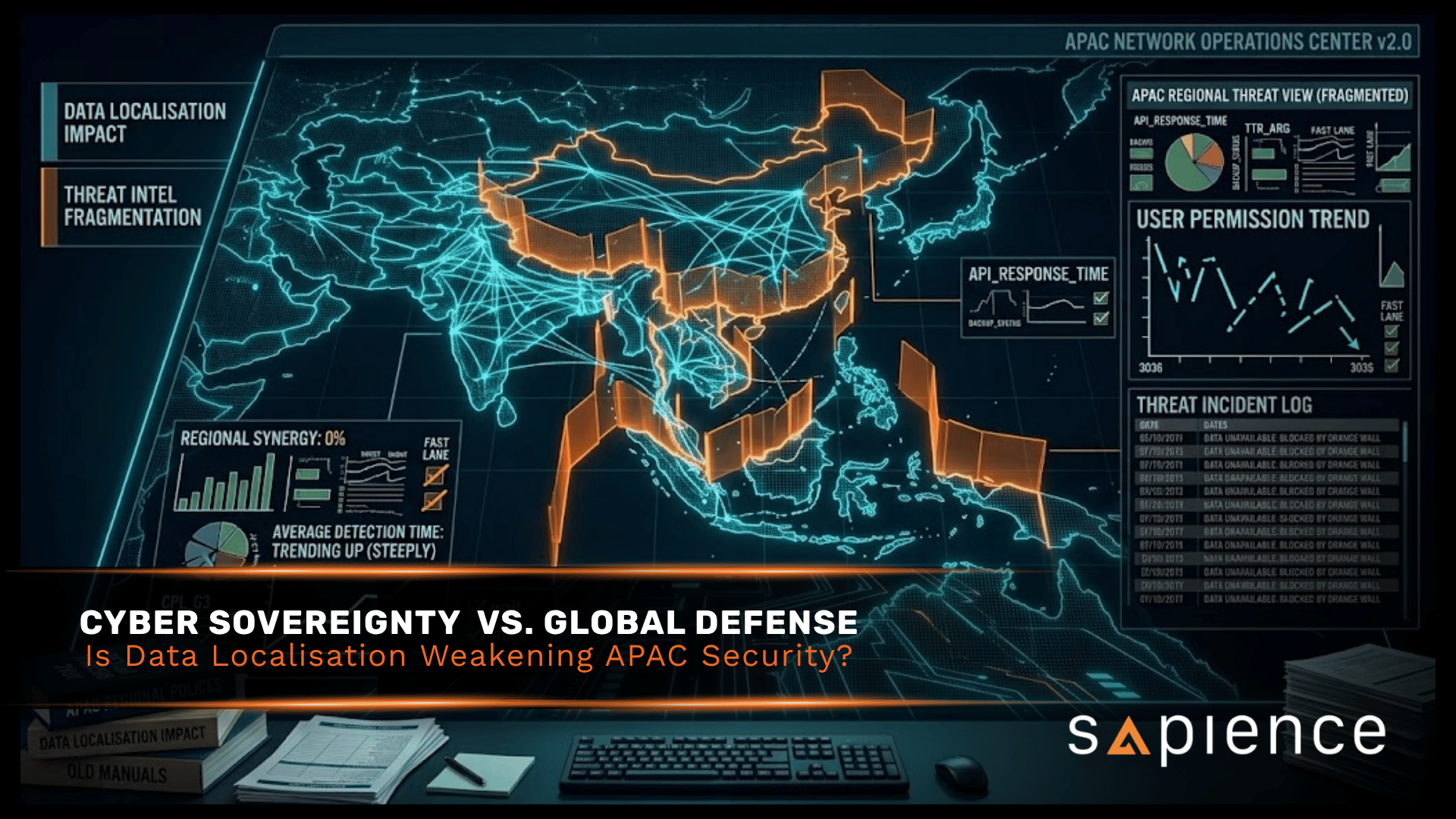
Asia-Pacific data residency and cyber sovereignty banner by Sapience. The visual depicts a fragmented APAC threat map enclosed by digital walls, targeting search intent around data localization laws, cross-border threat intelligence, regulatory compliance, and regional security coordination.
Posted on 07/09/2026

Is “Cyber Sovereignty” Making Asia-Pacific Less Secure?

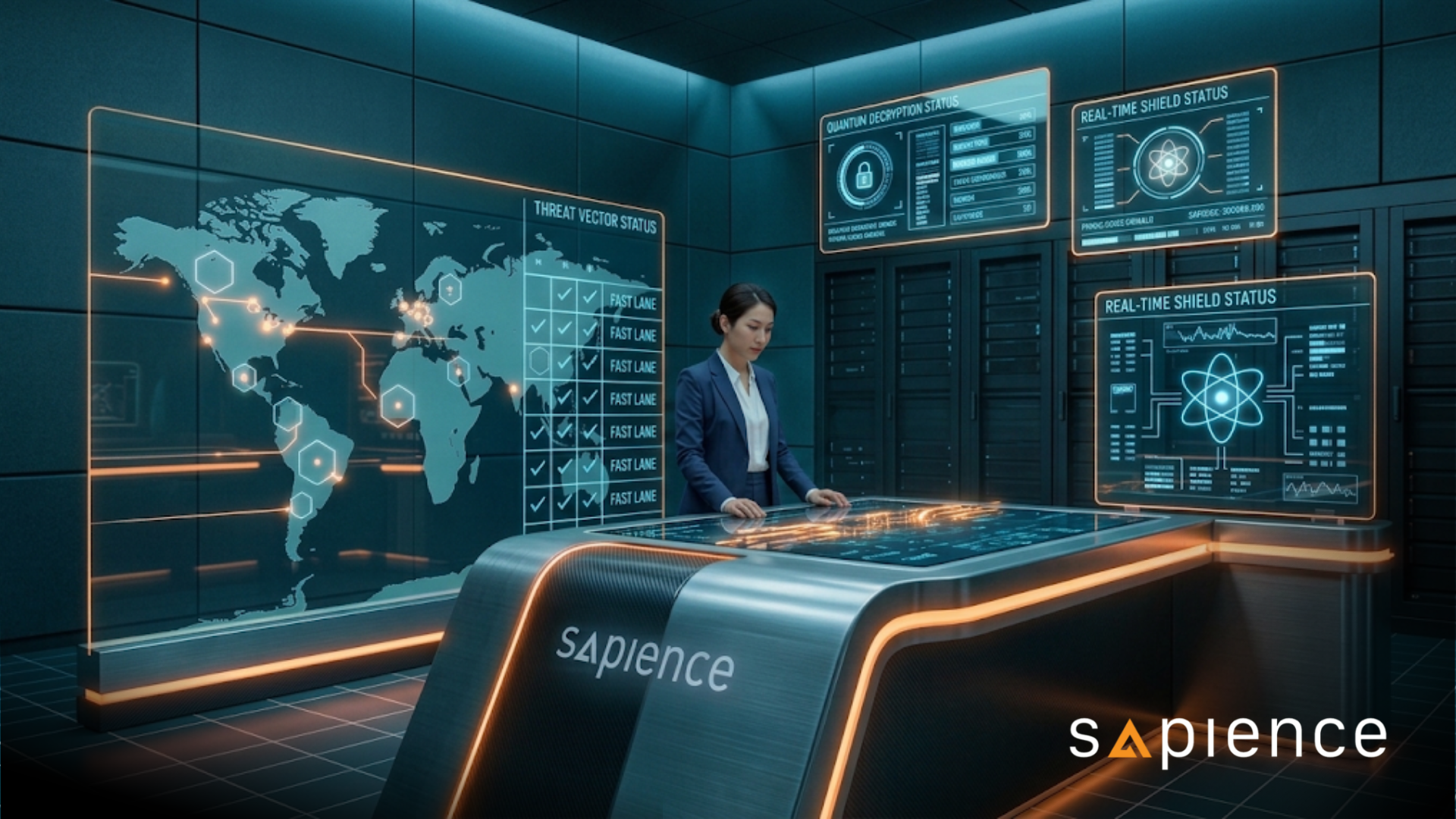
High-tech Site Reliability Engineering (SRE) operations center visual by Sapience. Illustrating the application of Kaizen continuous delivery and system resilience, the image depicts real-time threat vector monitoring, quantum decryption metrics, and automated shield statuses for enterprise infrastructure.
Posted on 24/08/2026

From “Firefighting” to Flow: How Kaizen Powers World-Class SRE

Login

Sign Up

Back to Login