Do you appear to be not bad at some hobby that you truly enjoy? Whatever it is, badminton, bridge, painting, baking … etc. Have you ever wondered what would happen if you could take it seriously? A friend from uni-time is doing just that! He decided to take a 1-year mid-career break from an IT managerial role (he is in his 40s) and dedicated to … foosball! (aka table football, table soccer)
I met up with him recently. It has been nearly a year since his sabbatical began. To recount his achievements, he is in the Canadian National Team, he has competed over 20 tournaments across North America and Europe (according to him, Germany is the hot spot) and his world rankings are about 100 across singles, doubles and combined (honestly, I had no idea the scale and degree of seriousness of the foosball prior to our meet-up).
I casually asked him, What strikes you the most about the past year? He replied with a sombre expression, Back to basics! I practice every single day for an hour or 2 to bring the ball as SLOWLY as possible with a figure across the table. I only appreciate the basic movement after 20/30-year of highly-intensed fast plays.
This reminds me of martial arts masters starting the day with squatting and Olympic swimmers starting with kicking drills.
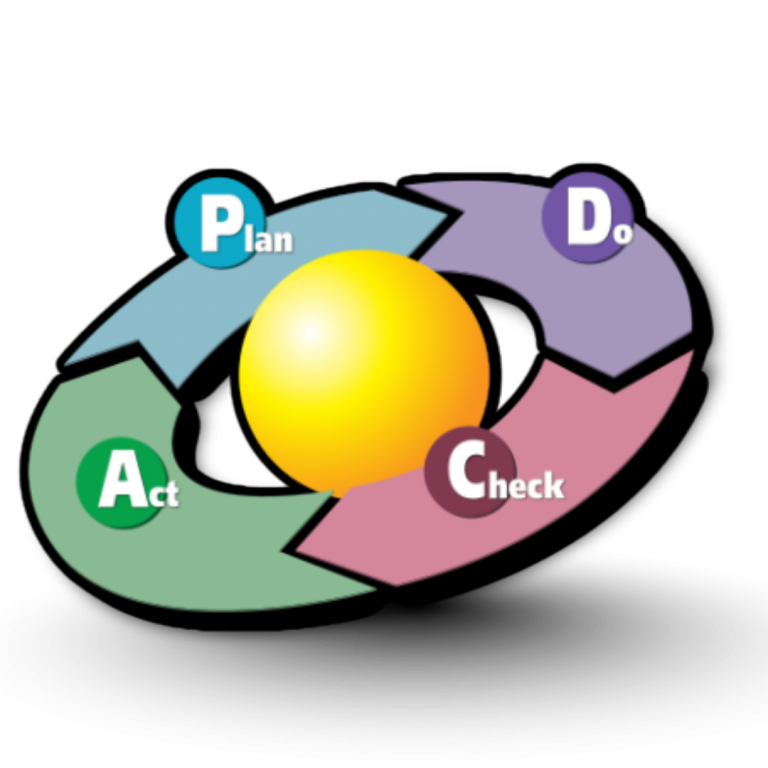
Back to Information Technology, I reflect on the topics that I cover – Cybersecurity, Risk Management, Service Management, SDLC (software development lifecycle), Project Management, Governance… etc. I often share with customers, if you see a cyclic diagram, you see PDCA (plan-do-check-act) in it. I’d say PDCA is indeed the ‘basic’ of a lot of best practices.
Take a GenAI adoption initiative as an example, organisations go through :
1. Plan – Establish objectives and processes required to deliver the desired results.
What is the problem we try to solve? Who is going to do what? When are we going to do everything? How are we putting things together?
The degree of planning depth and formality definitely varies according to the scale of initiative.
2. Do – Carry out the objectives from the previous step.
Mobilise people, process, products and partner to follow the plan.
3. Check – The data and results gathered from the do phase are evaluated. Data is compared to the expected outcomes to see any similarities and differences.
Possibly, weekly, biweekly or monthly, we gather updates about the initiative. In the meantime, we also consider macro-factors around it, e.g. organisational priorities, stakeholder input, any changes that impact us …etc.
4. Act – Records from the “do” and “check” phases help identify issues, problems, non-conformities, opportunities for improvement, inefficiencies, etc. Adjust accordingly.
Adjust the course of action, carry on, or, wrap it up, if we meet the conditions (including early termination scenarios).
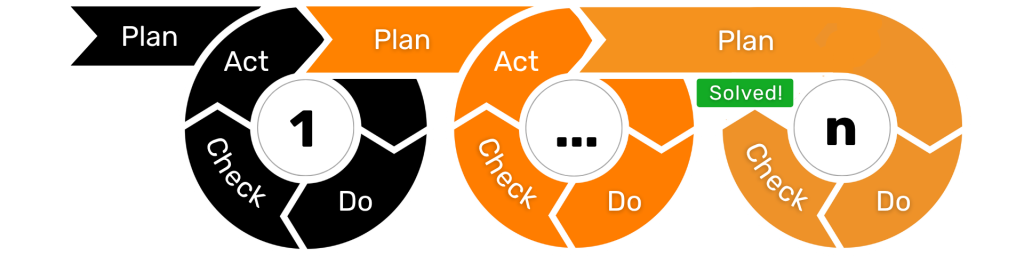
The PDCA cycle may repeat itself as needed –
(Please note, I took the liberty of mapping the frameworks loosely. Definitely, there are areas of overlap.)
The PDCA cycle is an iterative process. As seen in a GenAI adoption initiative, it repeats itself as needed until the objectives are met and a solution is implemented. ( Wikipedia PDCA )
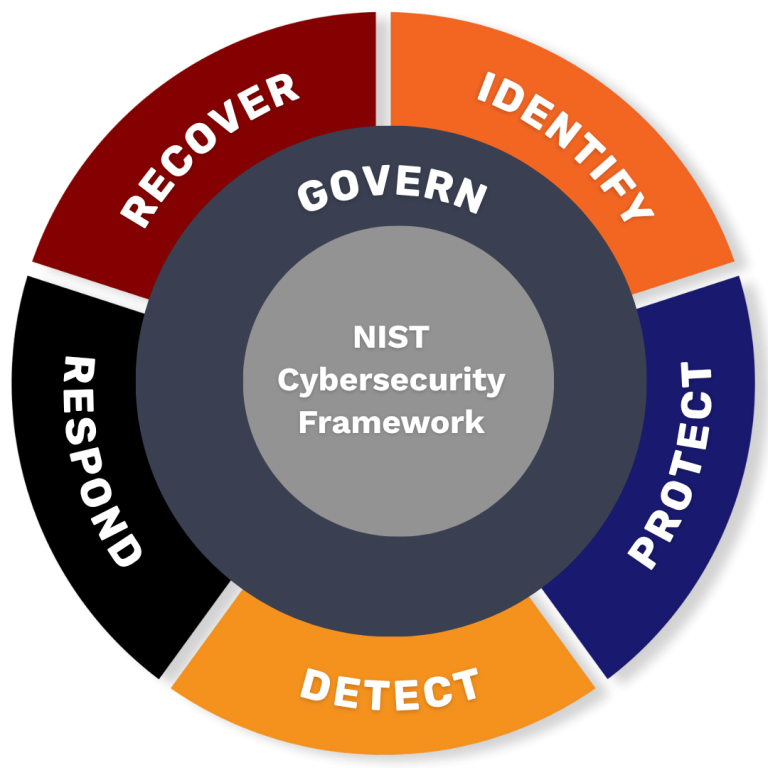
GOVERN – Provide outcomes to inform what an organisation may do to achieve and prioritise the outcomes.
Do
IDENTIFY – Understanding the organisation’s assets (e.g., data, hardware, software, systems, facilities, services, people), suppliers, and related cybersecurity risks enables an organisation to prioritise its efforts. PROTECT – support the ability to secure those assets to prevent or lower the likelihood and impact of adverse cybersecurity events.
Check
DETECT – enable the timely discovery and analysis of anomalies, indicators of compromise, and other potentially adverse events.
Act
RESPOND – support the ability to contain the effects of cybersecurity incidents. RECOVER – support the timely restoration of normal operations.
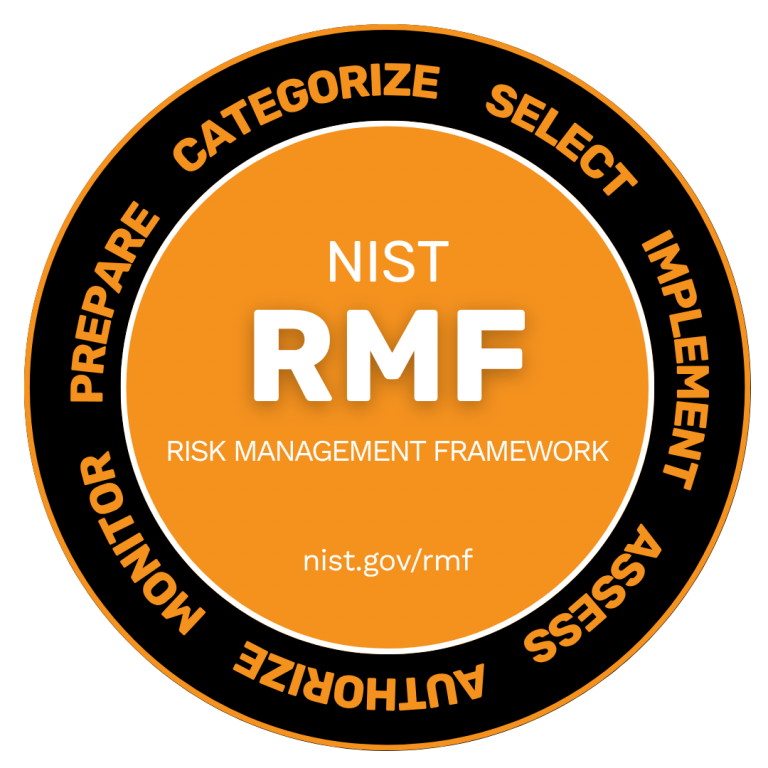
PREPARE – Establishing a context and priorities for managing security and privacy risk. CATEGORISE thesystem and the information processed, stored, and transmitted by the system based on an analysis of the impact of loss.
Do
IMPLEMENT the controls and describe how the controls are employed within the system and its environment of operation.
Check
ASSESS the controls to determine if the controls are implemented correctly, operating as intended, and producing the desired outcomes.
Act
AUTHORISE the system or common controls based on a determination that the risk to organisational operations and assets, individuals, other organisations, and the Nation is acceptable. MONITOR the system and the associated controls on an ongoing basis to include assessing control effectiveness, documenting changes to the system and environment of operation, conducting risk assessments and impact analyses, and reporting the security and privacy posture of the system.
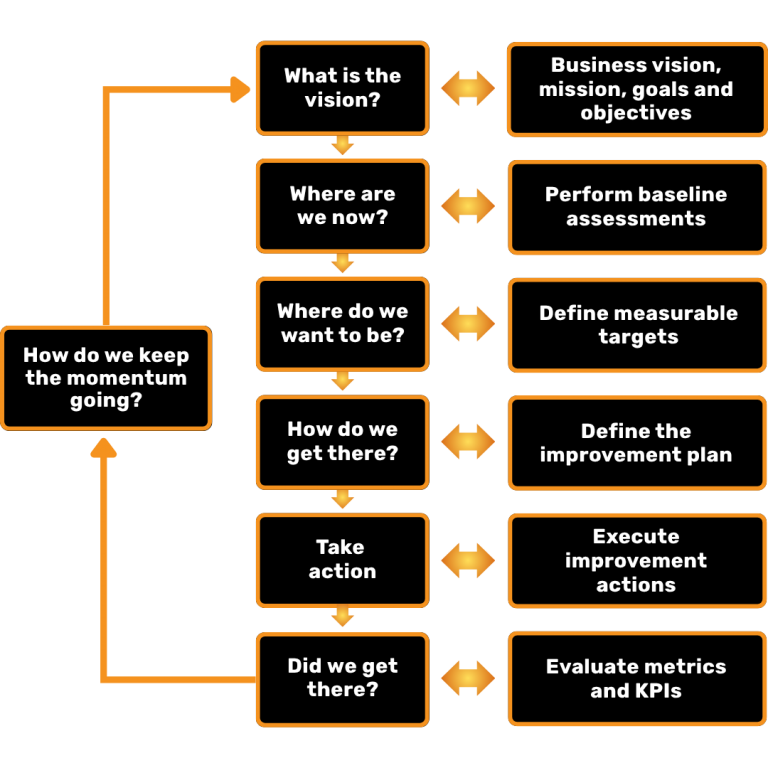
Time to visit the ITIL continual improvement model –
The ITIL Continual Improvement Model’s seven steps map directly to the PDCA cycle for continuous improvement.
What is the vision? Figure out business vision, mission, goals and objectives. Where are we now? Perform baseline assessments. Where do we want to be? Define measurable targets. How do we get there? Define the improvement plan.
Do
Take action – Execute improvement actions.
Check
Did we get there? Evaluate metrics and KPI’s.
Act
How do we keep the momentum going? Determine next course of action.
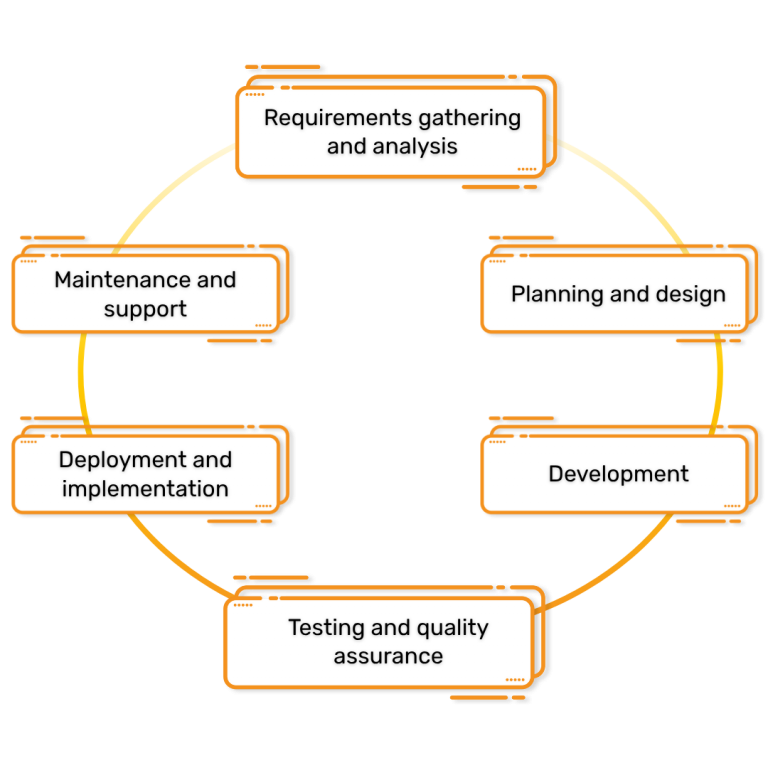
When it comes to software development –
The SDLC applies the PDCA cycle for a structured, high-quality approach to software development.
Requirements gathering and analysis – understand the client’s requirements and objectives. Planning and design – outline the development roadmap, including timelines, resource allocation, and deliverables.
Do
Development – code.
Check
Testing and quality assurance – ensure the software’s reliability, performance, and security, rigorous testing and quality assurance (QA) processes are carried out.
Act
Deployment and implementation – go live Maintenance and support – address any issues, enhance performance, and incorporate future enhancements.
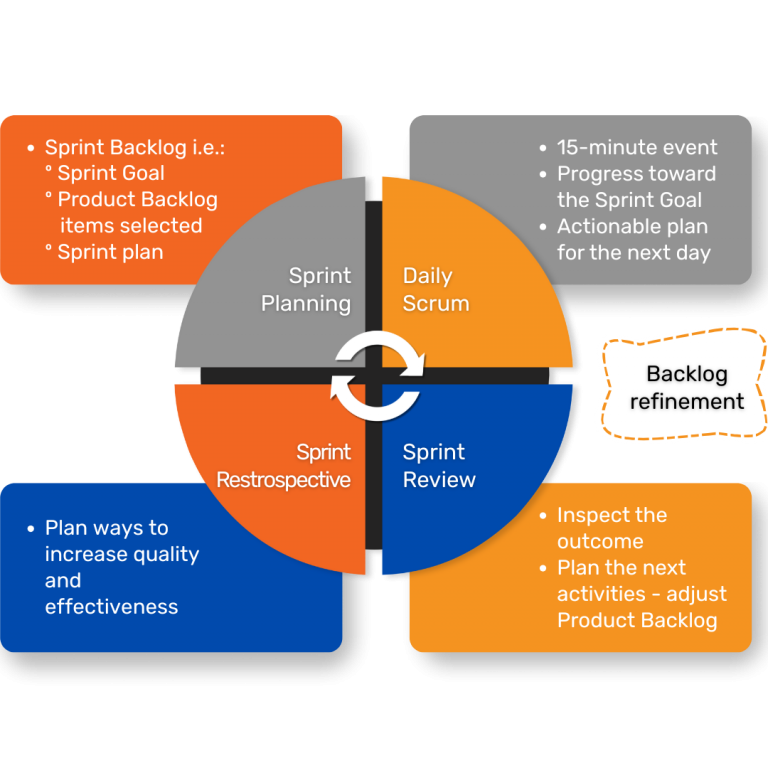
The Scrum framework is a simple but powerful process for complex projects. This diagram outlines the core events and how they form a continuous loop to deliver value incrementally.
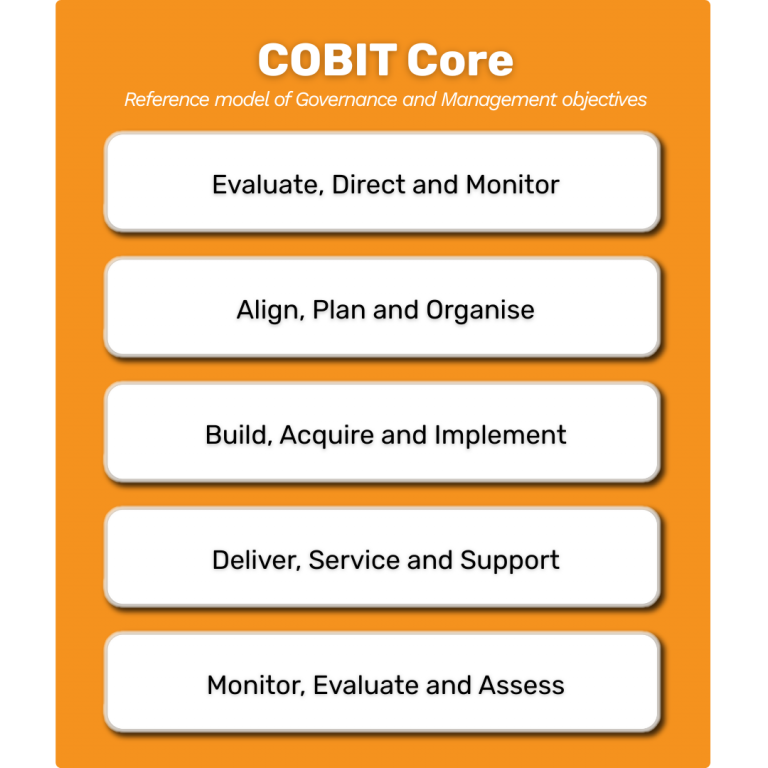
The COBIT 2019 Core model outlines the five key domains for governance and management objectives in a framework designed to help enterprises govern and manage their information and technology.
The PDCA concept is definitely applicable to the world of Agile and Governance as well. I often repeat ‘Agile is a series of mini lightweight SDLC, in principle.’ (I cannot recall where I heard this from.)
Highlighting the common fundamental elements (PDCA) across various frameworks is to emphasize the cyclical nature of the best practice adoption (continual improvement ! see another mention here) and not to dismiss the variation and uniqueness each framework presents itself.
The world is changing at a lightspeed pace. Often, we feel as soon as a plan is drawn up, the next moment something would come up to invalidate it. However, spearing ahead without a plan (at least high-level or rough order) is not wise, either. Adjusting the Plan-Do-Check-Act cycle to cope with changes and realign with the goals has remained the true north.
Epilogue
As the foosball friend is approaching the end of his 1-year break (at the moment of writing this piece), he has not yet decided if he’d return to work. He is actively participating in the federation level to bring up the viewership and commerciality, coaching the uprising players, (potentially) working on a e-foosball (virtual reality) game, and practicing the basics everyday.
Exclusive Expert Insights
Join Our Newsletter
Posted on 25/09/2026
Tech Takes the Field: How Silicon and Code are Rewriting Sports